How to Make Chicken Stock with Nettles
Ali Segersten
Stocks or broths can be used in many different ways, well beyond soups. Homemade stock is far more nutritious than store-bought stock, even the organic brands. For one, commercial stocks, whether chicken or vegetable, use many different "natural" flavorings. What is a natural flavoring anyway? It can be anything, but most often it is a man-made chemical, often containing MSG (free glutamic acid). Did you know that the FDA classifies MSG as "natural" and by using other terms such as "natural flavoring" or "yeast extract," manufacturers can somewhat deceive label-reading consumers into buying their products? The flavoring industry is a billion dollar industry. Most of us won't buy a product that doesn't taste good. Humans have receptors on their tongues for glutamate, the amino acid we recognize as the common "meat" flavor in foods. Using MSG in foods such as chicken stock is a way to cut corners and create a cheap food for a profit. And unfortunately, MSG is a neurotoxic substance causing headaches and in large amounts, possible damage to the brain (in B6 and magnesium deficient people). By making your own stocks using high-quality ingredients, you create so much flavor you would never need to add anything else to them.
Here is an ingredient list for an organic chicken stock made by a well-known company: Organic chicken broth (filtered water, organic chicken), Organic chicken flavor (organic chicken flavor, sea salt), Natural chicken flavor (chicken stock, salt), Sea salt, Organic evaporated cane juice, Organic onion powder, Turmeric, Organic flavor.
Now let's look at the ingredient list for a homemade stock: Organic chicken carcass, onions, garlic, leeks, celery, carrots, parsley, rosemary, thyme, black peppercorns, Herbamare, and fresh nettles.
I know we are all very busy and for some of us, just the thought of making your own stock seems overwhelming. But it doesn't need to be. Stocks can be simmered slowly for hours on the stove with very little attention needed. When you roast a whole chicken and have pulled all the meat from the bones, simply toss it in a stockpot (8-quart), add your vegetables, water, vinegar, and salt then cover and simmer for 6 hours or more. If you don't have time to make stock within a few days of roasting the chicken then put the chicken carcass in the freezer and take it out when you are ready.
Nutritional benefits of consuming homemade chicken stock:
- contains nutrients that can strengthen digestion
- adds gelatin which is rich in gut and joint supporting components
- contains many minerals in an easily absorbable form, including calcium
- adds small amounts of easily digested proteins to the diet
Because it is spring, I've been adding fresh nettles to our stock these days. Fresh nettles can be seen in just about every forest around us this time of year. We've harvested some ourselves but need to get out soon and stock up before they get too big. Nettles are best harvested when only a few inches high. If you are interested in learning more on nettle harvesting please read a post I did last year on Harvesting Nettles with Children.
Nutritional benefits of nettles:
- rich source of minerals, such as calcium, iron, magnesium, and zinc
- high in carotenoids, potassium, and Vitamin K1
- may assist in reversing anemia
- contains anti-inflammatory compounds
- is a mild diuretic that can decrease water retention problems
- can assist in boosting fertility in women
Nettle Chicken Stock


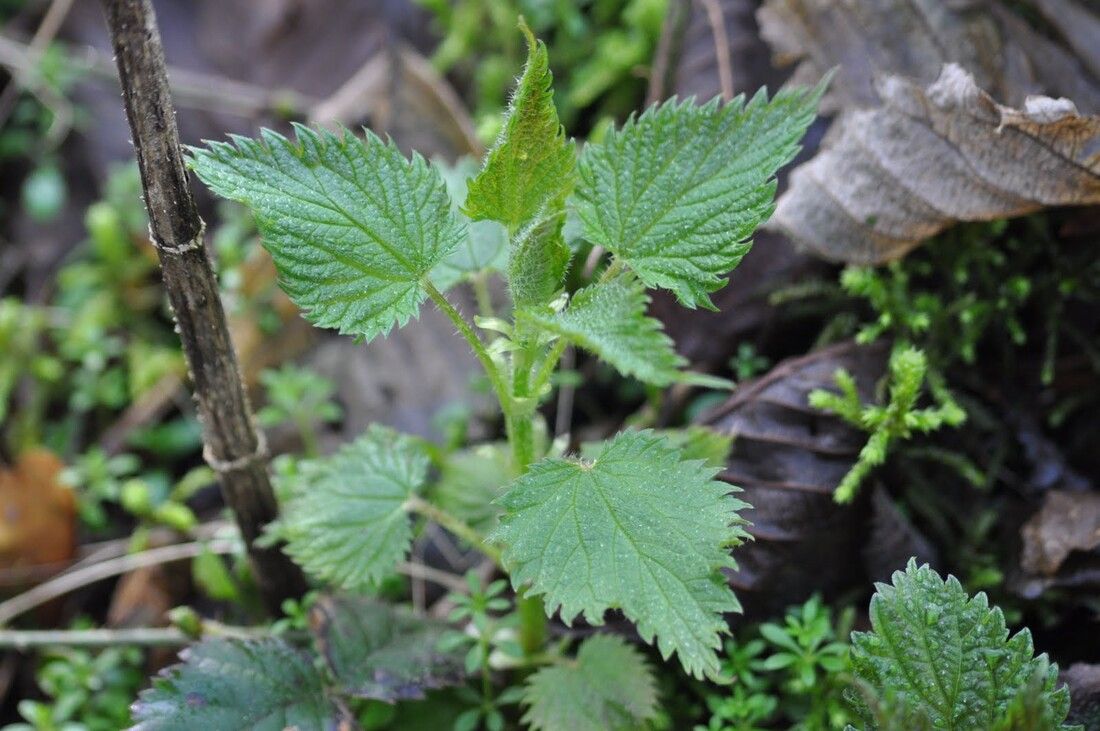
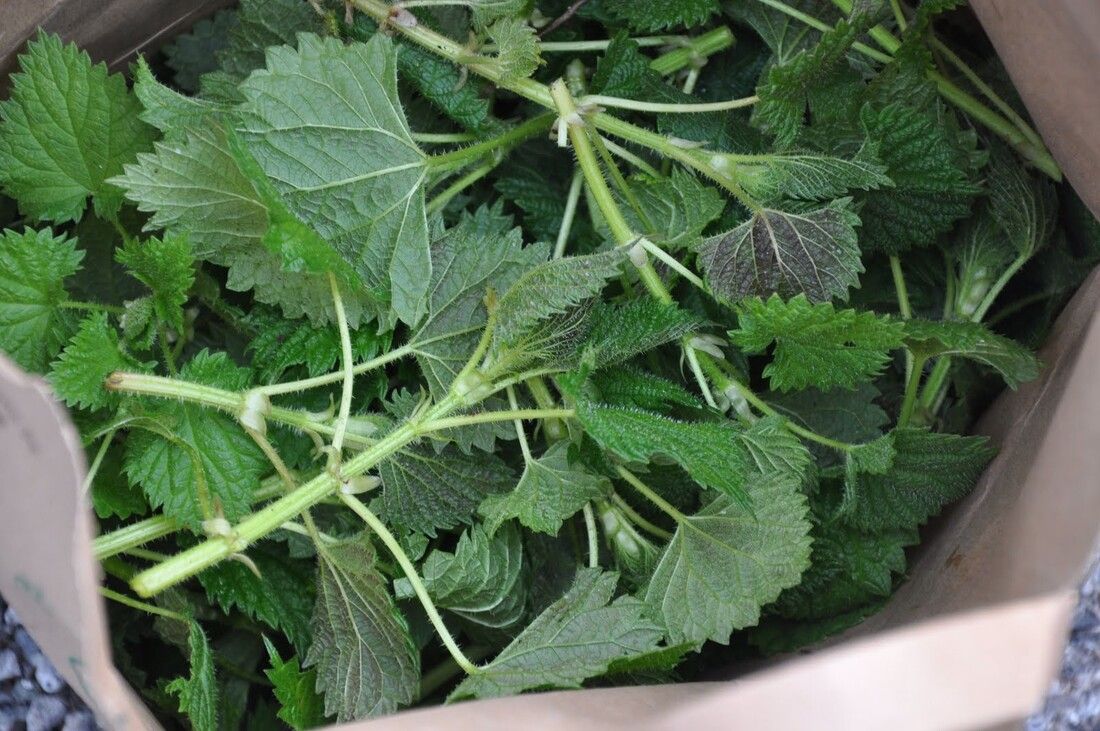


Every time we roast a chicken I make homemade chicken stock from the leftover bones and skin. The stock in these photos was made from a locally raised, pastured organic chicken that was rubbed with salt, and then roasted. I pour my stock into glass mason jars and freeze the majority of it right away. This way my freezer is continually stocked with fresh, homemade, organic stock. Use stock to make soups and stews, or to cook whole grains. You can add it to mashed potatoes, sauces, or basically anywhere a liquid is needed for a savory dish. The vinegar in the stock is needed to help extract the minerals from the chicken bones. The stock won't have a vinegary taste as long as you don't add too much.
- Add all ingredients to an 8-quart stockpot. Gently bring to a simmer. Make sure that it is a gentle simmer, on low or medium-low heat.
- Cook, covered, for 3 to 12 hours. The longer cooking times will extract more nutrients and produce a richer flavored stock.
- Place a large colander over another large pot or bowl. I use an 8-cup pyrex liquid glass measure because it is easy to pour from. I only pour half of the stock through at once to make pouring into the jars easier. If using a bowl or another pot, use a ladle to put the stock into jars.
- Once all of the jars are filled, let them cool completely in the refrigerator, then cover them and freeze (label with date if needed) or refrigerate for up to a week.
Instant Pot Directions:
- Add all ingredients to your Instant Pot, reducing water to 10 cups.
- Set the valve to the SEALING position.
- Set to cook on high pressure for 60 minutes.
- When it is done, allow the pressure to come down naturally for 30-40 minutes. Move the valve to the VENTING position to release any remaining pressure and remove the lid.
- Place a colander over a bowl and pour the stock through the strainer. Pour stock into jars and store in your refrigerator for up to a week.
Use this recipe in our Meal Planner


About the Author
Alissa Segersten, MS, CN
Alissa Segersten, MS, CN, is the visionary behind Nourishing Meals®, a comprehensive online meal-planning membership designed to support
Nourishing Meals Newsletter
Email updates.


Add Comment